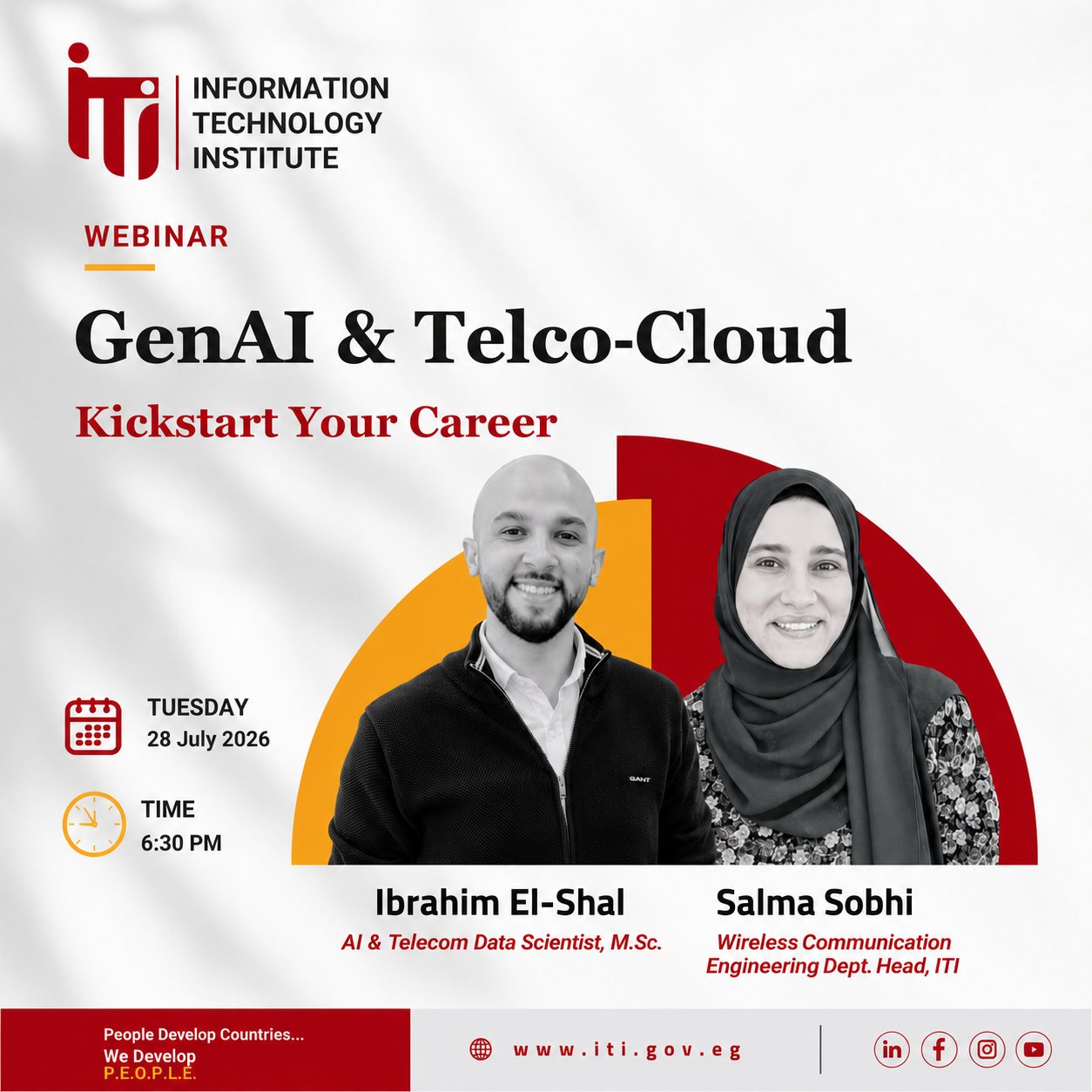
Kickstart Your Career: GenAI & Telco-Cloud
Guest Speaker · ITI – Information Technology Institute
A career-focused session on building GenAI and Telco-Cloud skills for telecom roles, with practical guidance for graduates entering the industry.
Applied Data Scientist working where AI, data science, and telecommunications meet — network analytics, anomaly detection, forecasting, root-cause analysis, and the production engineering that keeps those systems running once they ship.







A production-oriented Retrieval-Augmented Generation system combining hybrid retrieval, cross-encoder re-ranking, and grounded evaluation for telecom network intelligence.
View case studyA production analytics platform built around Apache Superset to unify multi-database reporting and reduce custom dashboard development for engineering teams.
Guest Speaker · ITI – Information Technology Institute
A career-focused session on building GenAI and Telco-Cloud skills for telecom roles, with practical guidance for graduates entering the industry.
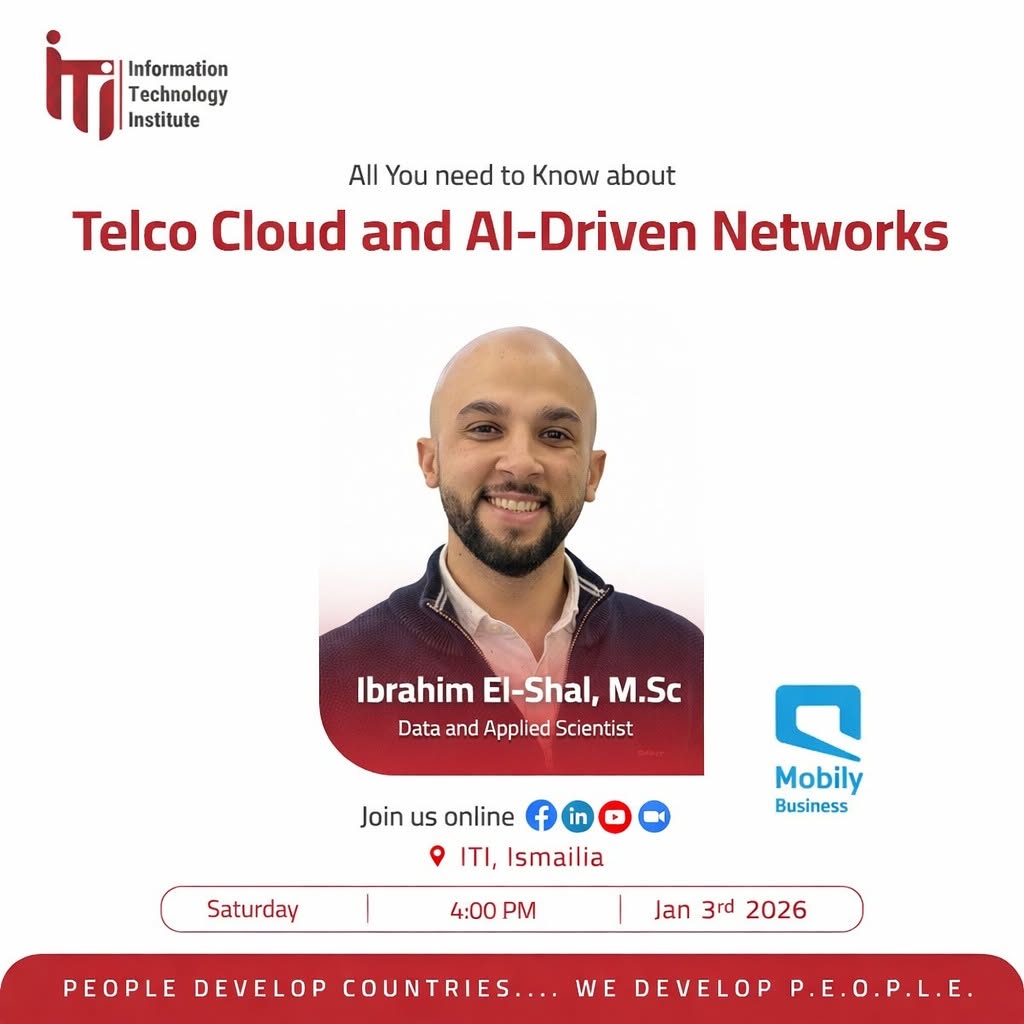
Guest Speaker · ITI – Information Technology Institute
Suez Canal University Branch
An introductory session on cloud computing and AI in telecom networks, emerging roles in the field, and practical career guidance.
The problem, constraints, and action that follows should determine the technical approach—not the other way around.
Definitions, granularity, missingness, population bias, and aggregation can invalidate an otherwise correct analysis.
Reliability, scalability, monitoring, reproducibility, and integration are part of the solution.
I prefer an explainable limitation over a confident conclusion that the data cannot justify.
Domain knowledge, data engineering, machine learning, and operational context should reinforce each other rather than operate in isolation.
Check the KPI, population, denominator, time window, and aggregation before trusting the result.
Understand how the data was generated, filtered, and aggregated before trusting patterns.
Then select the statistical, ML, or engineering approach that fits the problem.